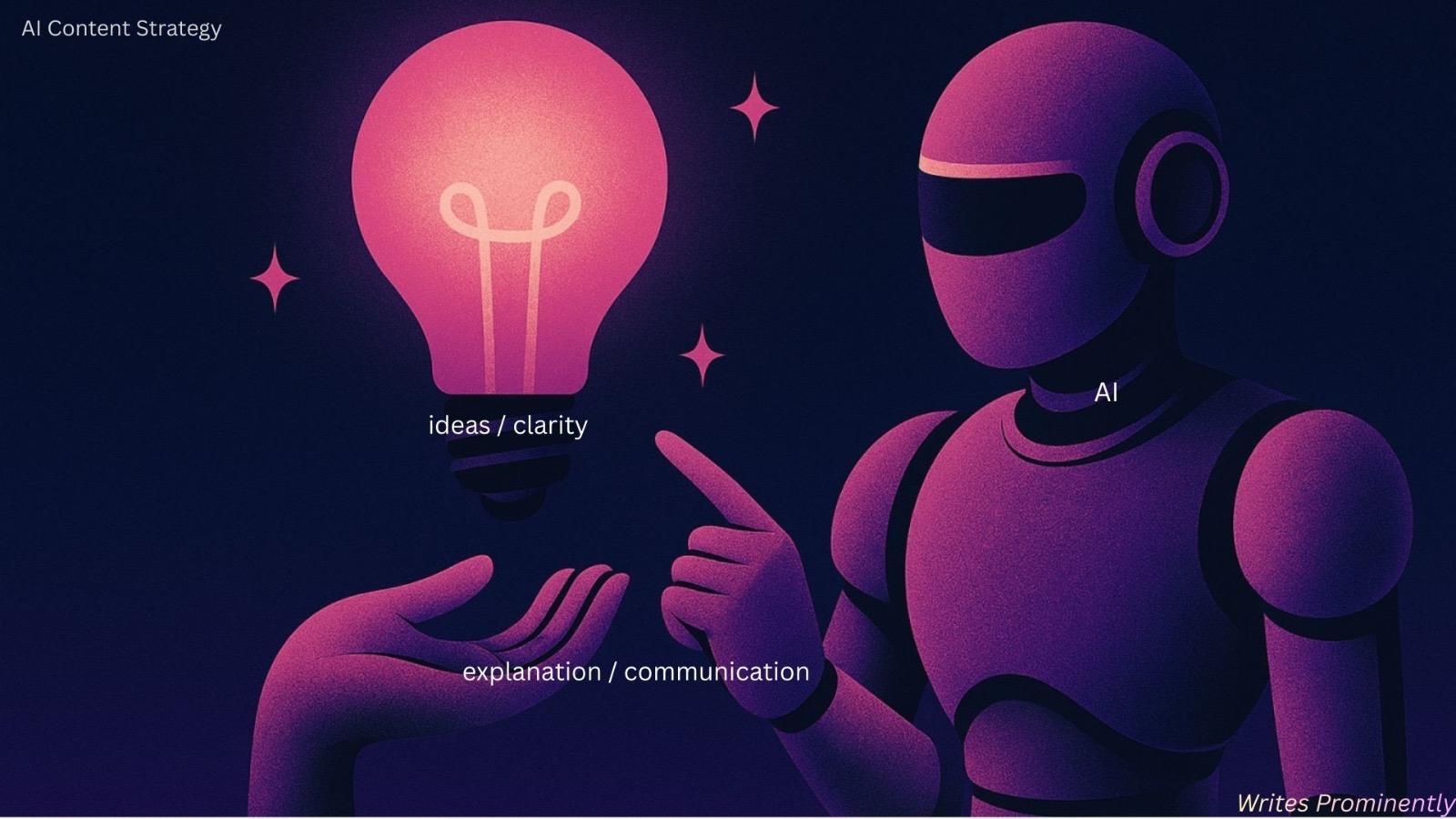
Why Most AI Startups Struggle to Explain What They Do (And How to Fix It)
AI startups’ content writing is often the hardest part
You’d think building an AI product is the hard part.
It’s not.
Explaining it clearly?
That’s where most AI startups struggle.
I’ve seen founders build powerful tools, products that genuinely solve real problems, but when it’s time to communicate what they do, everything becomes… complicated.
Too many technical terms.
Too much assumption.
Not enough clarity.
And the result?
People don’t get it.
And when people don’t get it, they don’t buy.
Yet for all the innovation happening in the AI space, many AI startups struggle with a surprisingly simple problem:
explaining what they actually do.
Not because the technology is weak.
Not because the product lacks potential.
But because complex ideas are rarely translated into clear language.
And clarity is the difference between curiosity and adoption.
The Real Problem Isn’t Your Product
Here’s the truth most people don’t want to hear:
Your product is probably not the problem.
Your messaging is.
A lot of AI startups fall into this trap:
They describe features instead of value
They write for themselves instead of their audience
They assume users understand the technology
But your audience is not thinking about your model architecture.
They’re asking one simple question:
👉 “How does this help me?”
Why Clarity is a Growth Strategy
Clear communication is not just “nice to have.”
It’s a growth driver.
When your messaging is clear:
People understand your value faster
Your website converts better
Your content ranks and attracts the right audience
According to industry best practices, strong content strategy plays a key role in helping businesses communicate value and drive organic growth.
That’s why content isn’t just writing.
It’s positioning.
What Most Startups Get Wrong
Let’s break it down.
1. Overcomplicating the Message
Trying to sound “smart” often makes things worse.
If your audience needs to reread your sentence, you’ve already lost them.
2. Focusing on Features Instead of Outcomes
Nobody cares that your tool uses AI.
They care what it does for them.
👉 Saves time?
👉 Increases revenue?
👉 Reduces effort?
Lead with that.
3. Ignoring SEO Completely
Even if your message is clear, if it’s not optimized, no one will find you.
Good content should:
Answer real search queries
Use the right keywords naturally
Be structured for readability
You don’t need to rebuild your entire product.
You need to fix how you communicate it.
✔ Simplify Your Language
Write like you speak.
If it sounds robotic, rewrite it.
✔ Focus on Value First
Start with the problem you solve, not the technology behind it.
✔ Build a Content Strategy
This is where everything changes.
Instead of random blog posts, create content that:
Targets what your audience is searching for
Educates them
Positions you as an authority
If you’re building your authority as a brand, your website should clearly communicate your value. You can explore more insights on my homepage:
👉 https://writesprominently.com
If your startup is struggling to explain what it does, you’re not alone.
But here’s the good news:
It’s fixable.
Clarity is not a talent.
It’s a strategy.
And once you get it right, everything else, traffic, engagement, conversions, starts to align.